English
 Español
 Português
 русский
 français
 日本語
 Deutsch
 Tiếng Việt
 Italiano
 Nederlands
 ไทย
 Polski
 한국어
 Svenska
 magyar
 Malay
 বাংলা
 Dansk
 Suomi
 Pilipino
 Gaeilge
 عربى
 norsk
 اردو
 čeština
 Ελληνικά
 Українська
 فارسی
 தமிழ்
 తెలుగు
 नेपाली
 Burmese
 български
 ລາວ
 Latine
 Қазақ
 Azərbaycan
 slovenský
 Македонски
 Lietuvos
 Eesti Keel
 Română
 Slovenski
 Српски
 Afrikaans
 Беларус
 Монгол хэл
 O'zbek
 Sundanese
 Javanese


Product Description
Introduction of Gas Detection in Lithium Battery Storage Rooms
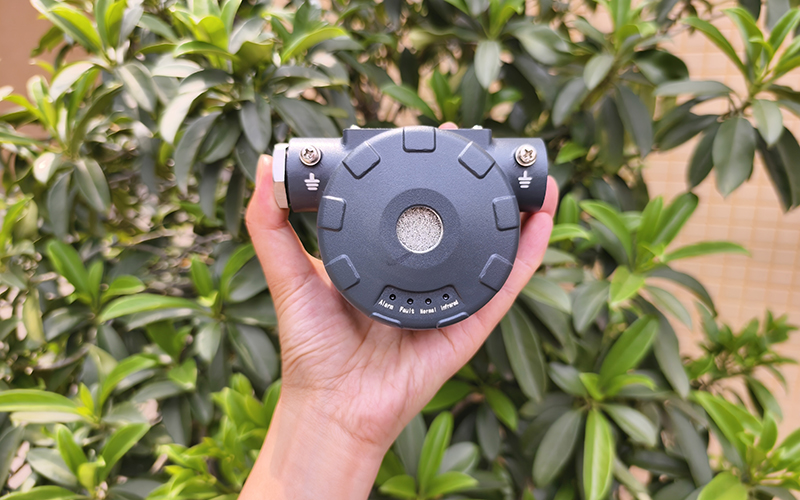
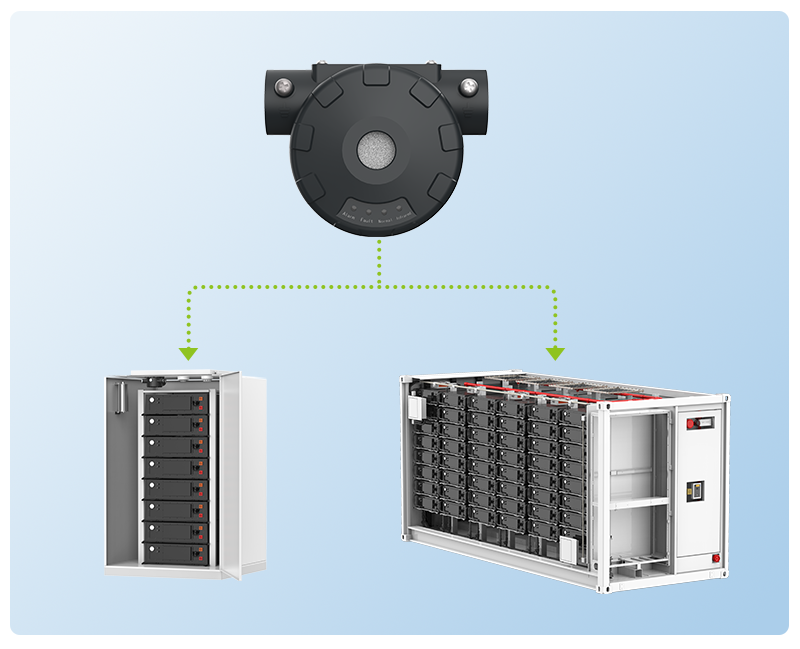
Lithium battery energy storage rooms face latent fire risks from carbon monoxide (CO) accumulation caused by battery thermal runaway, making real-time gas monitoring essential for operational safety. The CGT-CO2000 gas detector is a professional monitoring device tailored for energy storage scenarios, designed to continuously detect CO concentration in battery cabins. It triggers graded alarms once gas levels exceed thresholds, enabling staff to conduct timely emergency disposal and avoid safety accidents.
Built with robust industrial adaptability, this detector operates stably in extreme environments of -40℃ to +70℃ and 5%-95%RH humidity. It features Ex db IIC T6 explosion-proof certification and IP66 protection grade, fully complying with safety standards for Zone 1/2 flammable gas and dust environments. It is widely applicable to energy storage containers, battery cabinets and various lithium battery storage facilities.
Adopting modular and maintenance-free design, the device integrates electrochemical sensing technology with natural diffusion sampling for uninterrupted real-time monitoring. It supports RS485 communication and dry contact alarm output, enabling seamless linkage with upper monitoring systems. Simple installation and debugging make it suitable for large-scale networking deployment in energy storage projects.
Feature of Gas Detection in Lithium Battery Storage Rooms
1) Long Service Life & Maintenance-Free: The high-precision electrochemical sensor boasts a 10-year service life under normal working conditions. It is factory-calibrated with no regular calibration or daily maintenance required, greatly reducing operational costs.
2) High Precision & Graded Alarm: It features a 0-2000×10⁻⁶ detection range and 1×10⁻⁶ high resolution. Dual-level alarm thresholds (200×10⁻⁶ low alarm, 500×10⁻⁶ high alarm) achieve accurate risk grading and early warning.
3) Explosion-Proof & Durable Structure: Made of die-cast aluminum alloy, it adopts isolated explosion-proof design with complete international safety certifications. The IP66 waterproof and dustproof structure resists harsh on-site environmental interference.
4) Flexible Networking & Stable Output: Supporting RS485 bus communication, it allows up to 32 detectors to be connected in one system via hand-in-hand wiring. Dual dry contact relays ensure stable and reliable alarm signal transmission.
Product parameters of Gas Detection in Lithium Battery Storage Rooms
Product parameters of Gas Detection in Lithium Battery Storage Rooms
| Type | Specific parameters |
| Appearance parameter | |
| Pigment | dark grey |
| Shell material | die-casting aluminium |
| Outline dimension | approximately 100 mm × 78 mm × 53 mm |
| Product weight | approximately 415 g |
| Function parameter | |
| Test gas | CO(carbon monoxide) |
| Sensor type | electrochemical sensor |
| Sample mode | natural diffusion |
| Detection range | (0~2000)×10-6 (volume fraction) |
| Operate mode | continuous monitoring |
| Alarm value setting range (Two-level alarm) |
The minimum alarm threshold for production output is set at 200×10-6 (volume fraction). The maximum alarm threshold for the outlet concentration is set at 500×10-6 (volume fraction). |
| Alarm error | ±50×10-6 (volume fraction) |
| Range indication deviation | allowable error: ±80×10-6 (volume fraction) |
| Alarming light visibility | > 5 m (in darkness) |
| Response time | ≤ 30s |
| Call time | ≤ 15s |
| Resolution ratio | 1×10⁻⁶ (volume fraction) |
| Zero drift range | ≤50×10-6 (volume fraction) |
| Sensor service life | normal monitoring environment for 15 years |
| Electrical parameters | |
| Working voltage | 18VDC-32VDC |
| Rated voltage | 24VDC |
| Power dissipation | ≤ 1W |
| Working current | ≤ 5 mA |
| Alarm current | ≤ 25mA |
| Maximum current | ≤ 25mA |
| Output signal | RS485 (optional) [The communication address defaults to 1 at factory; a built-in 120Ω matching resistor is not connected by default and can be enabled using a jumper cap] |
| Baud rate | 9600 bps |
| Dry contact 1 – Low alarm relay | Group 1: Contact capacity (resistance load): 1A @30VDC; 300 mA @ 125VAC. Factory default: Open during normal operation, close during alarms, open during power loss. |
| Dry contact 2 – High alarm relay | Group 1: Contact capacity (resistance load): 1A @30VDC; 300 mA @ 125VAC. Factory default: Open during normal operation, close during alarms, open during power loss. |
| Indicate way | |
| Pilot lamp | 3 LED status lights |
| State indication | 1. During normal operation: The green indicator light remains illuminated continuously |
| 2. In case of a malfunction: The yellow indicator light remains constantly illuminated. | |
| 3. Alarm indication: When the lower limit is exceeded, a red light flashes; when the upper limit is exceeded, the red light remains on continuously. | |
| 4. During the upgrade process: Red, yellow, and green lights will flash alternately. | |
| Upgrade and configuration parameters | Can be connected to a computer via the RS485 bus (optional) |
| Certification and protection level | |
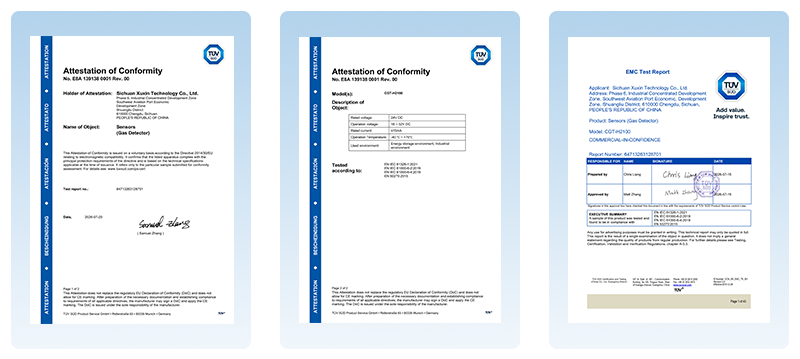
| Attestation | ROHS, CE ,ATEx, IECEx |
| Protect grade | IP66 |
| Explosion-proof mark |
II2 G Ex db IIC T6 Gb II2 D Ex tb IIIC T80°C Db |
FAQ about Gas Detection in Lithium Battery Storage Rooms
Q1: What is the working voltage of the detector?
A1: It works stably within 18-32VDC with a rated voltage of 24VDC, featuring built-in reverse power connection protection to avoid circuit damage.
Q2: How to judge the device’s working status?
A2: Green light steady on for normal operation, yellow light steady on for faults, red light flashing for low alarm and steady on for high alarm.
Q3: Can it be used in extreme temperature environments?
A3: Yes. It adapts to -40℃ to +70℃ wide temperature range, meeting the long-term operation demands of outdoor and closed energy storage facilities.
Q4: How many detectors can be networked at most?
A4: A single RS485 bus supports up to 32 devices. Only one detector needs to enable the 120Ω terminal resistor for stable signal transmission.
Q5: Does the device require daily calibration?
A5: No. It is pre-calibrated before delivery with zero drift ≤50×10⁻⁶. Annual standard gas testing is only needed after long-term use.